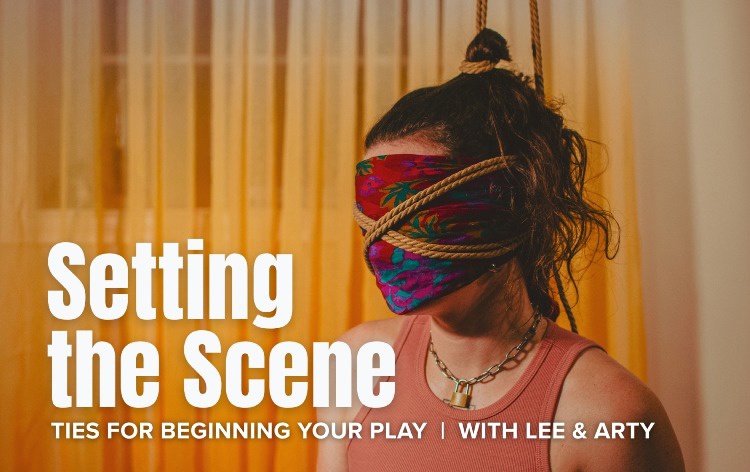
Setting the Scene: Ties for Beginning Your Play
sábado, 21 de noviembre de 2026 · 2:00 p.m.Coil & Cord · Brooklyn
Descripción
Setting the Scene: Ties for Beginning Your PlaySo, you've learned some fundamental ties and have a good grasp of rope handling, but do your rope scenes feel like they’re sometimes missing a certain “spark”? Do you ever find yourself getting bored while being tied, waiting for the “real” scene to begin? Or do you feel that your play suddenly spikes in intensity, without much build-up throughout the scene?Instead of treating rope scene set-up--getting into the position, unravelling rope bundles, etc.--as a checklist to of mundane tasks and a precursor before the play begins.However, every one of these preparation steps can be an opportunity to bring play into the scene--from the very beginning.In this intermediate-level class, participants will explore how to make the beginning of a rope scene an intentional part of the play. Through demonstrations and discussion, we’ll delve into the different choices we can make to shape these opening moments and add texture to our scenes, and participants will get to put these concepts into practice in hands-on partner tying activities.Topics covered in the workshop include:Rituals for entering a sceneWarm-up exercises for creating a shared headspace between the person tying and the person being tiedUsing positioning to create connection and space for scene progressionPacing and building intensity within your rope scenesPrerequisites:Participants who are tying should be comfortable with foundational skills including a single column ties, a double column tie, and any upper body & lower body harnesses. Tying participants should be prepared to receive feedback from their partners with curiosity.Knowlege of uplines is helpful but not required.Participants being tied should have strong body awareness and be able to communicate and provide feedback before, during, and after a tie.Both partners should have a working understanding of rope safety, including nerve risk, emotional awareness, and safe rope placement.Because this class centers on connection and emotional intimacy, participants should attend with someone they feel comfortable exploring those things with.What to bring: at least 2-3 hanks of rope (8-10 meters long)Presenters:Lee (they/them) is a gender-fluid self-tier, rope switch, and lifestyle Dominant. Since beginning their rope journey in 2017, Lee has developed an intuitive tying style rooted in playfulness, curiosity, and authentic connection. Their approach centers on adaptability and attunement, creating space for exploration across a wide range of dynamics and bodies. As an educator, Lee emphasizes the “why” behind rope, helping participants understand both technique and intention. They are also a strong advocate for accessibility in rope, emphasizing that rope is for everyone - regardless of presentation, ability, size, or physical differences.Arty (it/its)